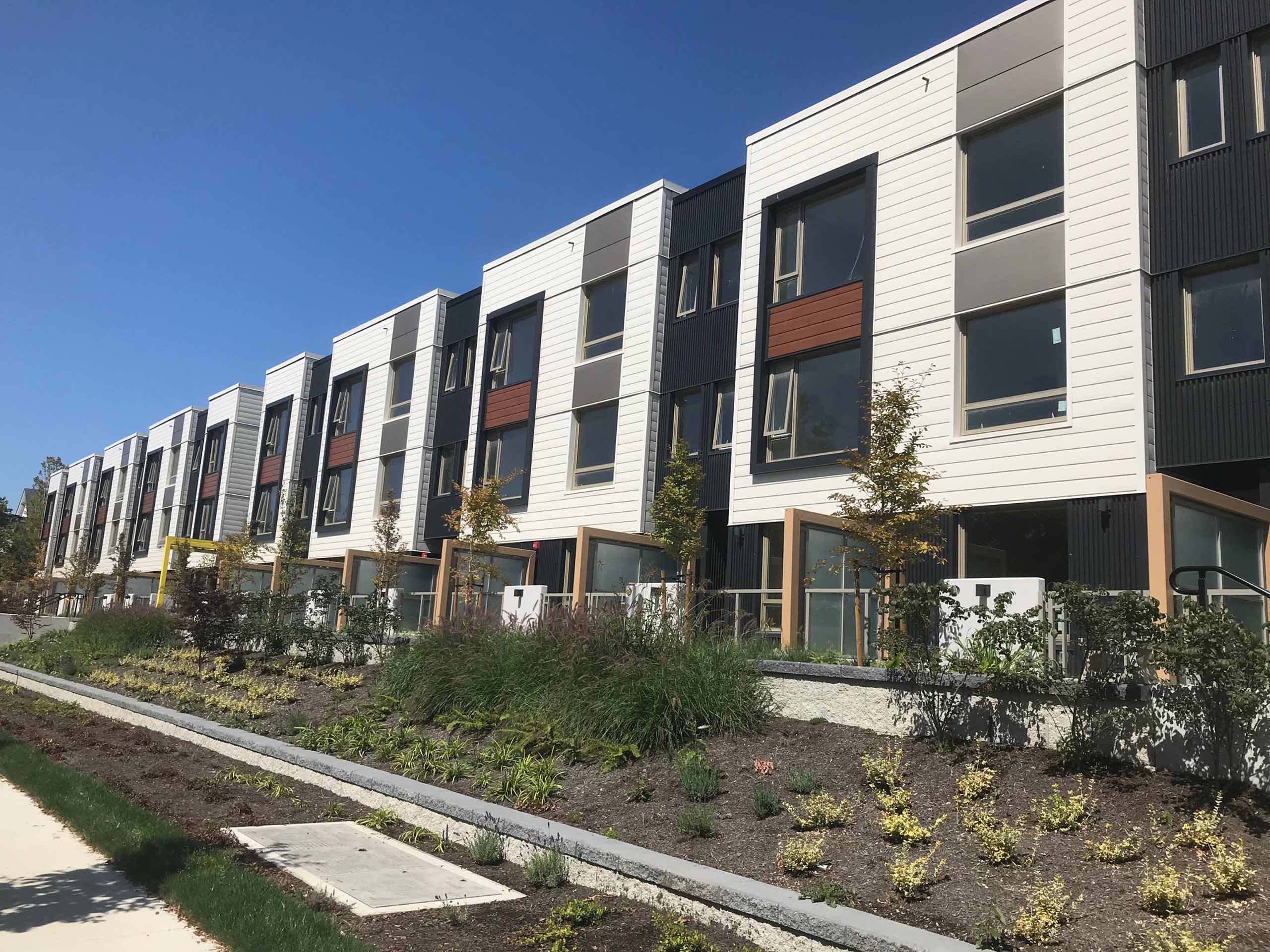
CLT Fraserview Towers Buidling Community Garden Affordable

Reach out, build community.

Contact USGet in touch any time with questions, comments, or concerns. We’re always here to help.

Phone

604-879-5111


Email

info@cltrust.ca


Address

200 – 2955 Virtual Way Vancouver, BC V5M 4X6


Contact Us

Frequently Asked QuestionsExplore our FAQ list for valuable insights and solutions.

What is Community Land Trust (CLT)?

Community Land Trust (CLT), established in 2015 and owned by the Co-operative Housing Federation of BC (CHF BC), is a BC-based non-profit real estate developer that builds and maintains affordable housing, with a focus on co-operative housing. CLT is owned by BC’s co-operative housing sector and is a member of the CHF BC group of social enterprises. 

With an over $45 million operating budget, over $1 billion in real estate assets and a team of 30, CLT drives growth in the community housing sector by developing new housing co-ops and not-for-profit housing, preserving and redeveloping existing co-ops, and leveraging the value of our portfolio to build more housing. 

CLT is guided by CHF BC’s vision of growing an inclusive community of sustainable and permanently affordable co-operative housing. We aim to create and support housing co-ops to be communities that promote and embody equitable access, opportunity, respect, and a sense of belonging for everyone. The CLT is overseen by a board elected from the members of CHF BC. 

The CLT is overseen by a board elected from the members of CHF BC and is guided by CHF BC’s vision: to grow an inclusive community of sustainable and permanently affordable co-operative housing. 

What is a community land trust and how does it protect housing?

Community land trusts are non-profit organizations that own (or have the intent to own) land, buildings and housing that are controlled by and for the community in perpetuity. Community land trusts take land out the private real estate market and use it generate community wealth and expand housing opportunities for people with a broad range of incomes, backgrounds and households. At CLT, we’re stewards and caretakers of community owned lands, ensuring they remain in community hands. 

What is co-operative housing? What is non-profit housing?

Housing co-ops are made up of people who form an association and work together to provide safe, secure and affordable homes for their members. Members purchase a share to join and elect directors to govern the co-op. Co-op members pay monthly rents called ‘housing charges’. While in a co-op, members can live in their home as they wish if they follow the rules of the co-op and pay their housing charges on time. For more information, visit www.chf.bc.ca.

CLT is creating a new kind of housing co-op, in that we combine the benefits of co-op living with professional real estate development (to build new co-ops) and property management services (including things like landscaping, repairs and building maintenance on behalf of a housing co-op). 

Non-profit housing is rental housing that is owned and operated by community-based non-profit societies. The mandates of these societies are to provide safe and secure affordable homes to individuals and families with low to moderate incomes. Most non-profit housing societies receive some form of financial assistance from the government to enable them to offer affordable rents. 

What makes CLT different from other non-profit housing societies?

CLT’s ownership structure is community based, through the co-op housing sector. We present a whole sector and tenure of housing that has a democratic process of governance where representatives are elected by co-op members.  

Where does CLT own and operate housing in BC?

We have more than 34 properties in our portfolio, with more than 2,684 occupied homes and another 1,200 homes in development or under construction in Victoria, Abbotsford, Maple Ridge, Vancouver, Surrey, New Westminster, Burnaby, Coquitlam, Kelowna and North Cowichan. 

How do I apply for CLT housing?

What are the housing charges in a CLT co-op?

Housing charges (that is, rent that you pay in housing co-ops) vary by housing co-op. Co-op housing charges are often more affordable than rents for comparable homes in the private housing market, and this affordability grows over time.

Because housing co-operatives are non-profit organizations, the housing charges collected by a co-op reflect the actual cost of housing, maintenance and property management, debt servicing and reserve funds. Housing co-op homes are also never offered for sale on the private market (like a privately owned house, condominium or townhouse might be), but rather, stay in community hands. For these reasons, co-op and non-profit are a secure and affordable housing option.

For a detailed explanation, see our Housing Charges Explained section

We want to work with CLT to protect and build affordable housing in our community. What’s the next step?

We’d love to hear from you about how we can work together to provide more permanently affordable housing in BC. Contact us today.

Housing Charges Explained

Community Land Trust properties are designed to be mixed income communities, supporting a range of incomes and household sizes. Each housing co-op was developed with its own mix of funding agreements with various levels of government.

Applying for a co-op home with Community Land Trust can look a little different than a typical rental. Due to funding agreements, residents may have to meet certain income standards, which requires us to collect additional information from applications.

While the exact make-up of each property varies, the most common formula is 20% shelter units, 50% rent geared to income units, and 30% low end of market rate units.

The following breakdown includes the most common types of affordable housing offered by Community Land Trust housing co-ops. Individual housing co-ops may have additional funding agreements that impact unit pricing and income thresholds.

Shelter
Eligibility for shelter or deep subsidy rates is based on a number of factors and is determined by BC Housing. These homes are typically filled through the BC Housing Registry waitlist. Applicants require a registry number. Learn more from BC Housing.

Rent Geared to Income (RGI)
To be eligible, household incomes must meet the standards outlined in BC Housing’s income limits guidelines. Monthly housing charges are set at 30% of total household income for eligible households.

As of 2026, the maximum income in the Metro Vancouver area is:
• Studio/1-bed: $58,000
• 2-bed: $72,000
• 3-bed: $86,000
• 4-bed+: $107,500

Applicants require a BC Housing registry number and will be asked to submit additional income verification documents.

Co-op members must submit annual income verification to remain eligible for RGI rates. Housing charges may change if household income does not align with the 30% threshold. Co-op members are not asked to move out if their household income grows, but their housing charges may raise to current LEM rates.

For all households, the number of bedrooms must correspond to household size, as outlined in National Occupancy Standards.

Low End of Market or Market Rate (LEM)
These homes are designed for middle income households. Eligible income thresholds will differ between co-ops and are aligned with BC Housing guidelines. Households who exceed the income threshold for RGI homes can apply for these homes, which are priced to be at or below the low end of similar units in the market.

While this is a general overview of common Community Land Trust housing charge guidelines, it is not an exhaustive list of housing and income subsidy programs available. BC Housing has more information on program funding and housing assistance.